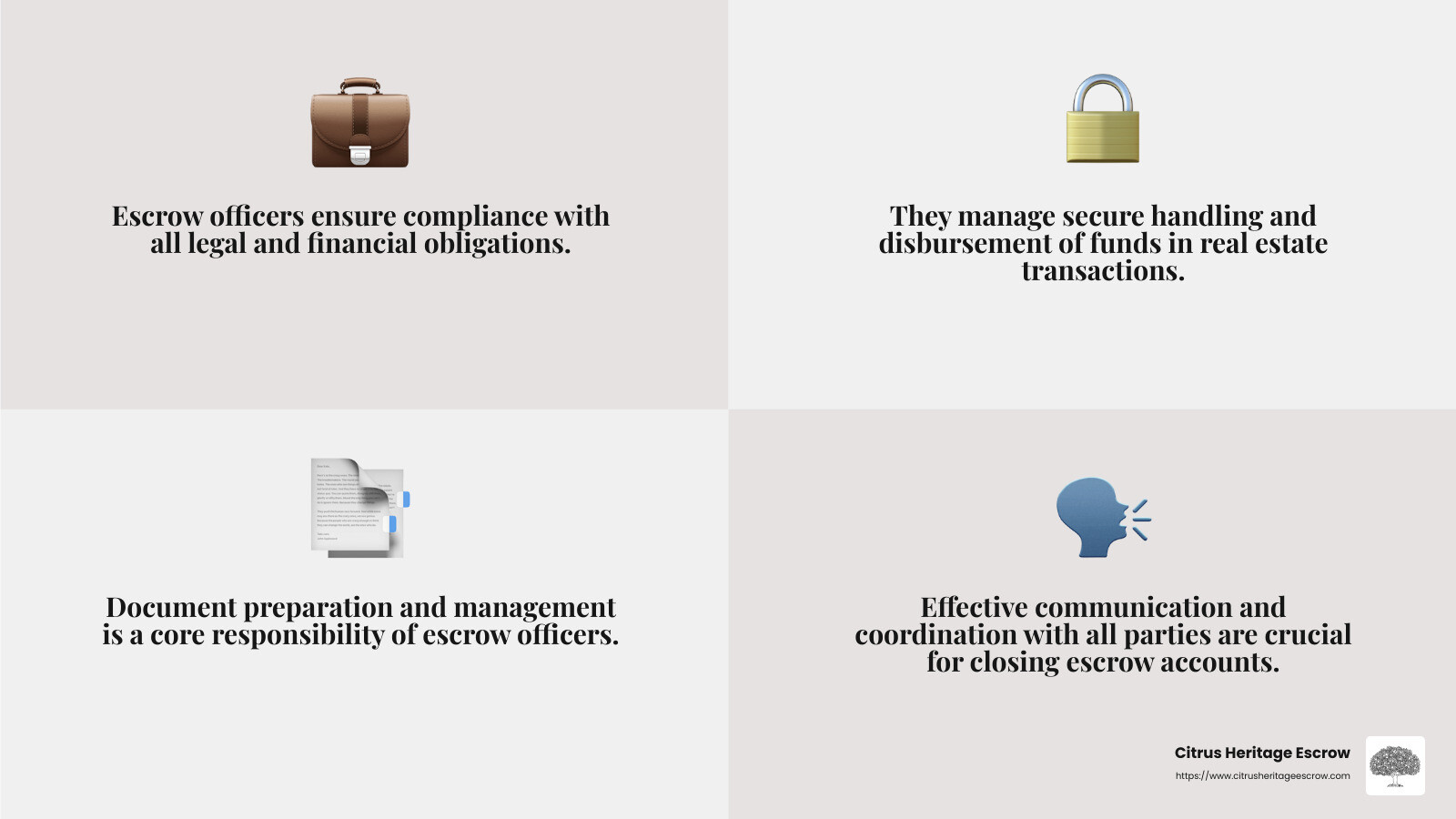
Escrow officer responsibilities are crucial in ensuring that real estate transactions are smooth, efficient, and legally compliant. These key professionals act as impartial facilitators between buyers, sellers, and other parties involved in a deal. They manage the entire escrow process, from opening an escrow account to handing over the keys, all while maintaining strict adherence to legal requirements and contractual obligations.
In any real estate transaction, escrow officers play a pivotal role. They monitor and manage the transfer of funds, handle essential documentation, and ensure that all parties meet the necessary conditions before closing. Their expertise and meticulous attention to detail help prevent legal issues and ensure a seamless transaction experience for everyone involved.
Without their expert guidance and coordination, the complexity of real estate transactions can lead to delays and legal complications. By serving as diligent overseers, escrow officers help real estate agents and loan officers focus on what they do best: building client relationships and negotiating successful deals.
What is an Escrow Officer?
An escrow officer is a neutral third party in real estate transactions. They work for entities like title companies, independent escrow companies, or real estate brokers. Their main job is to ensure that all the terms of a real estate deal are met before funds or property change hands.
Neutral Third Party
Escrow officers act as impartial mediators. They don’t represent the buyer or the seller. Instead, they work for the contract itself. This neutrality is crucial because it ensures that both parties fulfill their obligations as agreed. They hold funds, documents, and other assets until all conditions are satisfied.
Title Company and Independent Escrow Company
Escrow officers are often employed by title companies. These companies ensure that a property’s title is clear before a sale. They check for liens or other issues that could affect ownership. By working with title companies, escrow officers help verify that the property can legally be sold.
Independent escrow companies also employ escrow officers. These companies specialize in handling the escrow process separately from the buying and selling parties. This separation helps maintain neutrality and transparency throughout the transaction.
Real Estate Broker
In some cases, escrow officers work with real estate brokers. Brokers facilitate the buying and selling of properties. They often rely on escrow officers to manage the legal and financial details of the transaction. This partnership allows brokers to focus on client relationships and negotiations, while escrow officers handle the procedural aspects.

By acting as a neutral third party, escrow officers provide a critical service in real estate transactions. They ensure that all parties meet their obligations, keeping the process fair and transparent. This role helps prevent disputes and ensures a smooth transfer of property ownership.
Key Responsibilities of an Escrow Officer
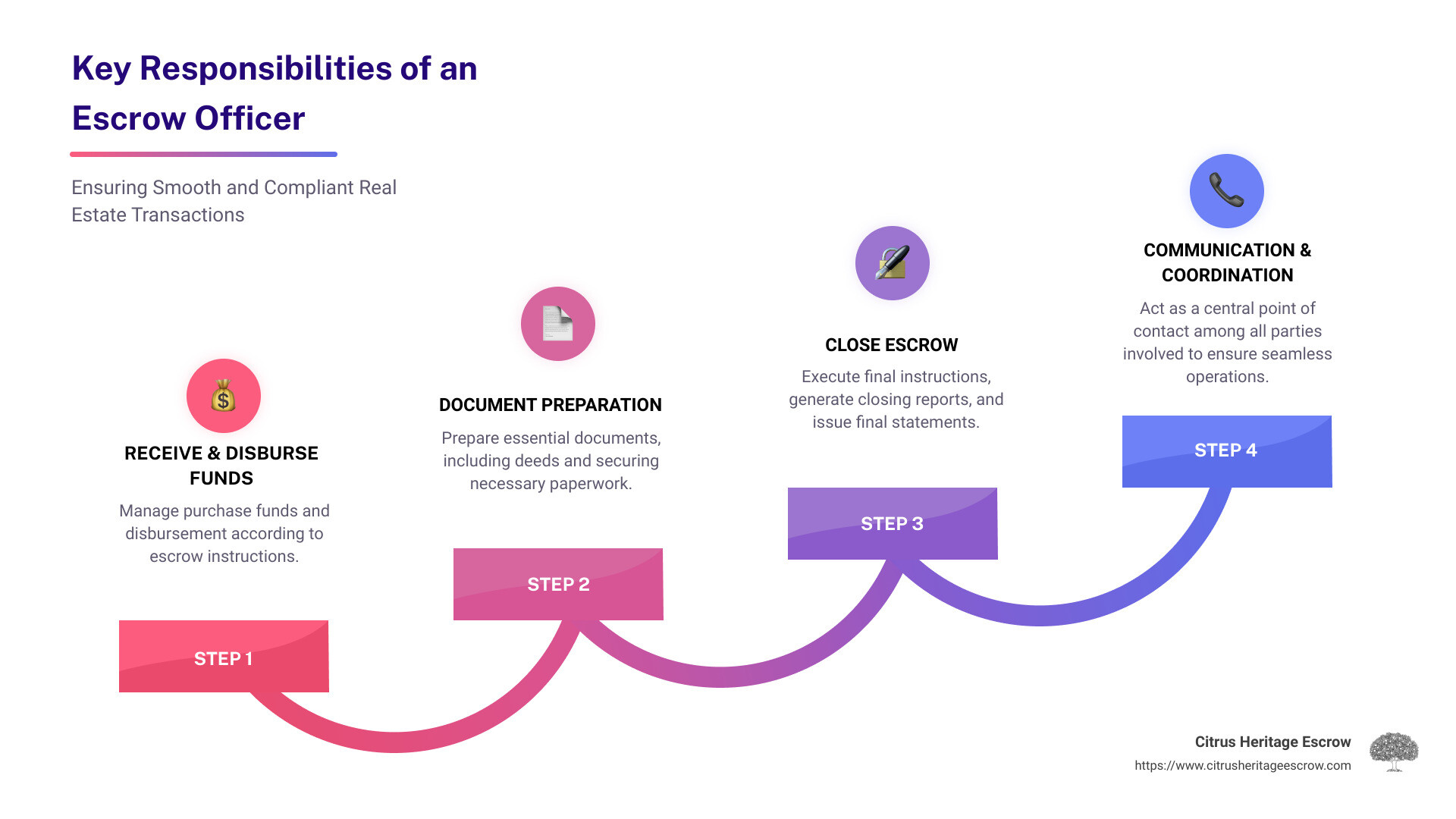
Escrow officers play several crucial roles in real estate transactions. Let’s explore their key responsibilities.
Receiving and Disbursing Funds
One of the primary escrow officer responsibilities is managing the flow of money. They receive purchase funds from the buyer and ensure these funds are distributed according to the escrow instructions. This includes paying authorized charges like title insurance, recording fees, real estate commissions, and loan payoffs.
For example, when a buyer deposits money into an escrow account, the escrow officer holds these funds until all terms of the transaction are met. Once everything is in order, they disburse the funds to the appropriate parties, ensuring a smooth and secure transaction process.
Document Preparation and Management
Escrow officers are also responsible for preparing and managing important documents. They secure deeds, prepare necessary paperwork, and forward these documents to the title company for further processing. This ensures that all legal documentation is accurate and complete.
For instance, they might prepare a deed that transfers property ownership from seller to buyer. They also ensure that all documents are in compliance with legal standards and ready for recording.
Closing the Escrow
Closing the escrow is a critical step in the transaction process. Escrow officers carry out the final instructions of both the buyer and seller, preparing final statements and closing reports. This step confirms that all conditions of the sale have been met.
During closing, the escrow officer ensures that all funds are properly disbursed, documents are signed, and the property title is transferred. This is the point where the buyer officially becomes the property’s new owner.
Communication and Coordination
Acting as the central point of communication, escrow officers coordinate between all parties involved, including buyers, sellers, title companies, real estate agents, and mortgage brokers. They ensure that everyone is informed and that any questions or issues are promptly addressed.
A good escrow officer keeps everyone on the same page, making sure that the transaction progresses smoothly and efficiently. Their effective communication skills help prevent misunderstandings and keep the process on track.
Compliance and Legal Requirements
Compliance with legal requirements is another essential duty of an escrow officer. They ensure that the transaction meets all lender’s requirements and complies with the escrow agreement. This includes handling legal documents and financial obligations accurately.
For example, they might verify that a title search has been completed or check that all necessary releases and contingencies are secured. By ensuring compliance, escrow officers protect all parties involved and help avoid legal complications.
In summary, escrow officers are responsible for managing funds, preparing documents, closing transactions, coordinating communication, and ensuring compliance with legal requirements. Their expertise and attention to detail are vital to a successful real estate transaction.
The Escrow Process Explained
The escrow process is a critical component of real estate transactions, ensuring that everything runs smoothly from start to finish. Let’s break down the key stages: opening, managing, and closing an escrow account.
Opening an Escrow Account
The journey begins with opening an escrow account. This step is essential as it sets the stage for a secure transaction. When a buyer and seller agree on a property sale, the buyer deposits earnest money—a good faith deposit—into the escrow account. This deposit shows the buyer’s commitment to the purchase and is held by a neutral third party, often an escrow company or a title company.
This neutral third party ensures that neither the buyer nor the seller can access the funds until all conditions of the sale are met. This provides peace of mind for both parties, knowing their interests are protected.
Managing the Escrow Account
Once the account is open, the escrow officer takes charge of collecting funds and holding assets. This involves overseeing all financial transactions related to the sale. The escrow officer ensures that all necessary payments, such as loan funds or additional deposits, are properly collected and held securely.
The escrow officer also plays a crucial role in disbursement upon conditions met. They ensure that funds are released only when all contractual obligations are satisfied. For example, once inspections are completed, and any contingencies are resolved, the officer disburses funds to the appropriate parties, like the seller and real estate agents.
Closing the Escrow Account
The final step is closing the escrow account, where the transaction is finalized. This involves releasing funds to the seller and other parties, such as agents and lenders, according to the escrow instructions. The escrow officer also ensures that all necessary documents are signed and properly recorded.
Recording documents is a vital part of closing. The officer forwards the deed and other essential documents to the local government office for official recording. This step legally transfers property ownership to the buyer, marking the successful completion of the real estate transaction.
The escrow process is all about safeguarding interests, managing funds, and ensuring a smooth transition of property ownership. Each stage, from opening to closing, is carefully managed by the escrow officer to ensure everything is in order.
Skills and Qualifications of an Escrow Officer
Required Education and Training
To become an escrow officer, a solid educational foundation is essential. At a minimum, a high school diploma or GED is required. However, many aspiring escrow officers choose to pursue further education. While not mandatory, a bachelor’s degree in fields like business, real estate, or finance can be advantageous.
Formal training is often provided by escrow and title companies. There are also specialized courses available through organizations like the American Escrow Association, which can deepen understanding of escrow processes. Additionally, state certification is typically required, ensuring that escrow officers meet specific regional standards and regulations.
On-the-job experience is invaluable. Most escrow officers learn the intricacies of the role through hands-on work, often starting in entry-level positions within title companies or real estate offices. This experience is crucial, as it provides practical knowledge that formal education may not cover.
Essential Skills
An escrow officer must possess a range of essential skills to effectively manage transactions and ensure compliance with legal standards.
Decision-making is a critical skill. Escrow officers must evaluate complex situations and make informed decisions quickly. This requires a keen eye for detail and the ability to identify potential issues in real estate agreements.
Clerical knowledge is also vital. Escrow officers handle a significant amount of paperwork, from deeds to settlement statements. They must be adept at organizing and managing documents to ensure accuracy and compliance.
Communication skills are paramount. Escrow officers serve as the central point of contact between buyers, sellers, real estate agents, and lenders. They must convey information clearly and professionally to ensure all parties are on the same page.
Understanding legal codes and regulations is essential to avoid potential pitfalls. Escrow officers must be familiar with court procedures and executive orders that impact real estate transactions.
Lastly, computer skills are necessary for managing digital records and utilizing office software. Proficiency in programs like Microsoft Office Suite is often required, as these tools aid in document preparation and data management.
In summary, becoming an escrow officer requires a blend of education, training, and a specific skill set. These professionals play a crucial role in real estate transactions, ensuring that everything from document preparation to fund disbursement is handled with precision and care.
Frequently Asked Questions about Escrow Officer Responsibilities
What is the role of an escrow officer?
An escrow officer serves as a neutral third party in real estate transactions, ensuring that all parties meet their contractual obligations. Their primary role is to facilitate transactions by managing the flow of funds and documents between buyers, sellers, and lenders. They ensure compliance with legal and contractual standards, making the process smooth and efficient.
Escrow officers are responsible for collecting funds from the buyer, holding them securely in an escrow account, and disbursing funds when all conditions are met. They also prepare and manage documents, such as deeds and closing statements, ensuring everything is in order for a successful transaction.
Which task is not the responsibility of an escrow officer?
While escrow officers handle many aspects of a real estate transaction, there are certain tasks that are not within their scope. For instance, they do not offer legal advice or negotiate the terms of the transaction. These tasks are typically handled by real estate agents or litigators. Escrow officers also do not resolve disputes between parties; their role is to follow the instructions provided in the escrow agreement.
What is the role of an escrow specialist?
An escrow specialist focuses on the detailed aspects of managing escrow accounts. They are responsible for drafting instructions and ensuring that all procedures comply with legal and financial regulations. Their expertise lies in collecting funds, managing them securely, and ensuring that disbursements are made according to the escrow instructions.
Escrow specialists play a critical role in maintaining the integrity of the escrow process. They ensure that all financial transactions are transparent and that all parties involved understand the steps required to complete the transaction successfully.