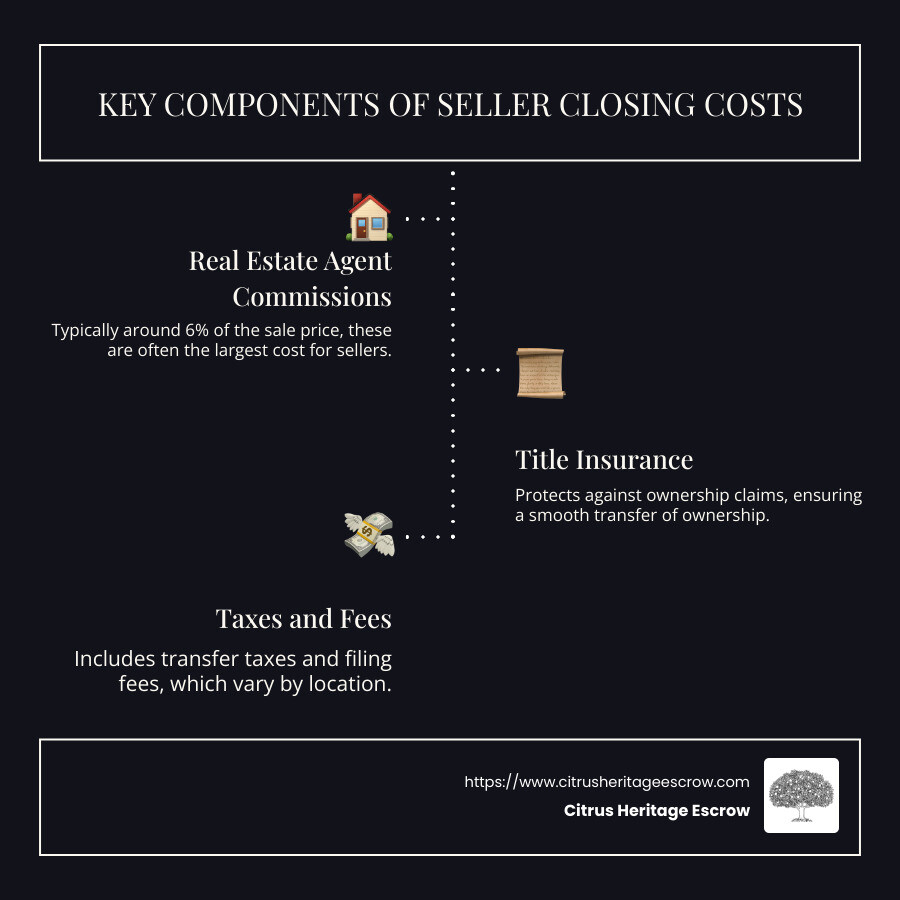
When it comes to selling a home, understanding the estimated closing costs for seller is crucial for a smooth transaction and maximizing profits. These costs can significantly impact your net proceeds from the sale and typically range from 6% to 10% of the home’s sale price. Key components contributing to these costs include:
- Real estate agent commissions: Typically around 6% of the sale price.
- Title insurance: Protects against ownership claims.
- Taxes and fees: Such as transfer taxes and filing fees.
The importance of knowing these costs cannot be overstated, as they can influence your financial planning and affect the overall success of your sale. Properly estimating and preparing for these expenses not only helps avoid surprises at the closing table but also ensures that you leave the transaction in a financially favorable position.
What Are Seller Closing Costs?
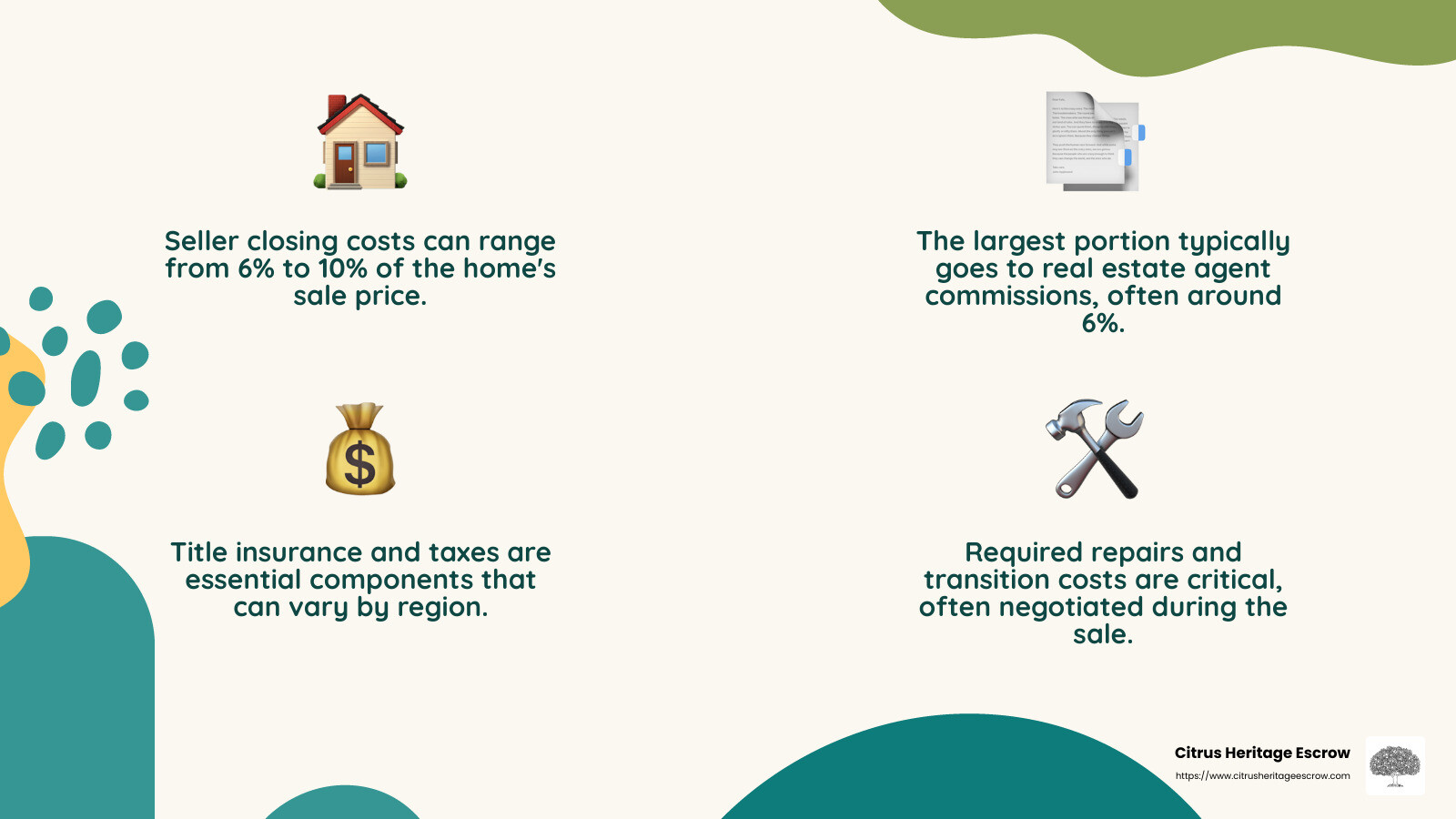
Seller closing costs are the expenses that a home seller is responsible for paying at the end of a real estate transaction. These costs are necessary to complete the sale and transfer ownership to the buyer. Typically, seller closing costs range from 6% to 10% of the home’s sale price. Understanding these costs is vital for sellers to accurately anticipate their net proceeds from the sale.
Key Components of Seller Closing Costs
- Real Estate Agent Commission: This is usually the largest portion of the closing costs. Traditionally, sellers pay a commission of around 6% of the sale price, split between the listing agent and the buyer’s agent. However, recent changes in the industry may influence this percentage.
- Title Insurance: This protects the buyer and the lender against any future claims or disputes over property ownership. The seller typically covers the cost of the owner’s policy, which can vary by region.
- Taxes and Fees: These include transfer taxes, recording fees, and any other local or state taxes. The exact amount depends on the property’s location and the local government’s requirements.
- Escrow Fees: These fees cover the cost of the escrow service, which handles the funds and documents during the transaction. The fee is usually split between the buyer and the seller.
- Remaining Mortgage Balance: If the seller still owes money on their mortgage, this balance must be paid off at closing. This includes any accrued interest and potential prepayment penalties.
- Seller Concessions: Sometimes, sellers agree to cover part of the buyer’s closing costs to facilitate the sale. These concessions are negotiated during the transaction.
- Required Repairs and Home Transition Costs: If the home inspection reveals necessary repairs or if the seller needs to cover costs for moving or temporary housing, these expenses may be included in the closing costs.
Typical Range
The typical range for seller closing costs is between 6% and 10% of the home’s sale price. For example, on a $500,000 home, the closing costs could be between $30,000 and $50,000. This range can vary based on factors like location, negotiation outcomes, and specific transaction details.
Understanding these components helps sellers prepare for the financial aspects of selling a home and ensures a smoother closing process. By anticipating these costs, sellers can make informed decisions and plan effectively for their next steps.
Breakdown of Seller Closing Costs
Selling a home involves various expenses, which are collectively known as seller closing costs. Let’s break these down to understand what each component entails and how they impact the overall cost.
Real Estate Agent Commission
The real estate agent commission is often the largest expense for sellers. Traditionally, this commission is around 6% of the home’s sale price, which is split between the listing agent and the buyer’s agent. For instance, on a $600,000 property, this would amount to $36,000. However, recent industry changes may affect this percentage, so negotiation is possible. Sellers can explore options like hiring a discount agent or selling the home themselves to reduce this cost.
Title, Escrow, Notary, and Transfer Tax
These fees are essential for transferring ownership and ensuring the transaction is legally binding.
- Title Insurance: This is a one-time fee paid by the seller to protect the buyer from future ownership disputes. It varies by region but is a crucial part of the closing costs.
- Escrow Fees: These cover the cost of escrow services, which manage funds and documents during the sale. Typically, these fees are split between the buyer and seller.
- Notary Fees: Notaries verify the signing of important documents, adding a layer of legal assurance.
- Transfer Tax: This is a tax imposed by the local government to transfer property ownership. The amount depends on the property’s location.
Remaining Mortgage and Equity Loans
If you still owe money on your mortgage, the outstanding balance must be settled at closing. This includes any accrued interest and, in some cases, a prepayment penalty if you pay off the loan early. Be sure to check your mortgage terms to avoid surprises.
Seller Concession
Seller concessions are incentives offered to buyers to close the deal. These can include covering part of the buyer’s closing costs or offering a discount on the sale price. Negotiating these concessions can be strategic in a competitive market, especially if repairs are needed or the buyer requests assistance with closing costs.
Required Repairs
Before closing, a home inspection might reveal necessary repairs. Common issues include structural problems or termite damage. Sellers may need to address these repairs, or they could offer a home warranty as an alternative. This warranty can cover certain repairs for the buyer, making the property more attractive.
Home Transition Costs
Moving out of your home can incur additional expenses. These might include:
- Short-Term Rental: If you need temporary housing before moving to your new home.
- Prorated Property Taxes: Taxes are typically split between the buyer and seller based on the closing date.
- HOA Fees: If applicable, these fees may need to be settled up to the closing date.
- Furniture Storage: Costs related to storing your belongings during the transition.
Understanding these costs and planning for them can help sellers manage their finances effectively and ensure a smooth transition to their next home.
How to Estimate Seller Closing Costs
Estimating seller closing costs can seem daunting, but with the right tools and knowledge, it becomes manageable. Here’s how you can get a clear picture of what to expect and make informed decisions.
Using a Seller Closing Cost Calculator
A seller closing cost calculator is a handy tool that helps you estimate the total expenses involved in selling your home. By inputting key details like your home’s selling price, remaining mortgage balance, and expected real estate agent commission, you can get a quick estimate of your net proceeds.
Example Calculation: Let’s say you’re selling your home for $600,000. You might have a remaining mortgage of $200,000 and expect to pay a 6% agent commission. By entering these figures into the calculator, you can estimate the costs and see how much you’ll walk away with after the sale.
These calculators are generally accurate, but they provide estimates. Actual closing costs may vary based on specific factors like location and service providers.
Factors Affecting Closing Costs
Several factors can influence your closing costs, and understanding these can help you plan better.
- Location: Different regions have different regulations and fees. For instance, some states might have higher transfer taxes or require specific inspections.
- Property Value: The selling price of your home affects costs like real estate agent commissions and transfer taxes, which are often percentage-based.
- Service Providers: Costs can vary significantly between different title companies, escrow services, and real estate agents. Shopping around can lead to savings.
State-Specific Variations
Closing costs can differ widely from state to state due to local regulations and median property values.
- Median Costs: Some states have higher median home prices, which can lead to higher percentage-based fees like agent commissions and transfer taxes.
- Regulations: Local laws can impose additional requirements, such as specific inspections or certifications, impacting overall costs.
- Local Fees: Some areas may have unique fees, such as community association dues or local government charges.
Understanding these state-specific variations can help you avoid surprises and budget more accurately for your closing costs.
By using tools like seller closing cost calculators and considering factors like location and property value, you can better estimate your closing costs. This preparation not only helps in budgeting but also empowers you in negotiations, ensuring a smoother home-selling process.
Tips to Minimize Seller Closing Costs
When selling your home, closing costs can add up quickly. But don’t worry—there are strategies to help minimize these expenses. Here’s how you can save:
Shopping Around for Service Providers
One of the simplest ways to cut down on closing costs is by shopping around for service providers.
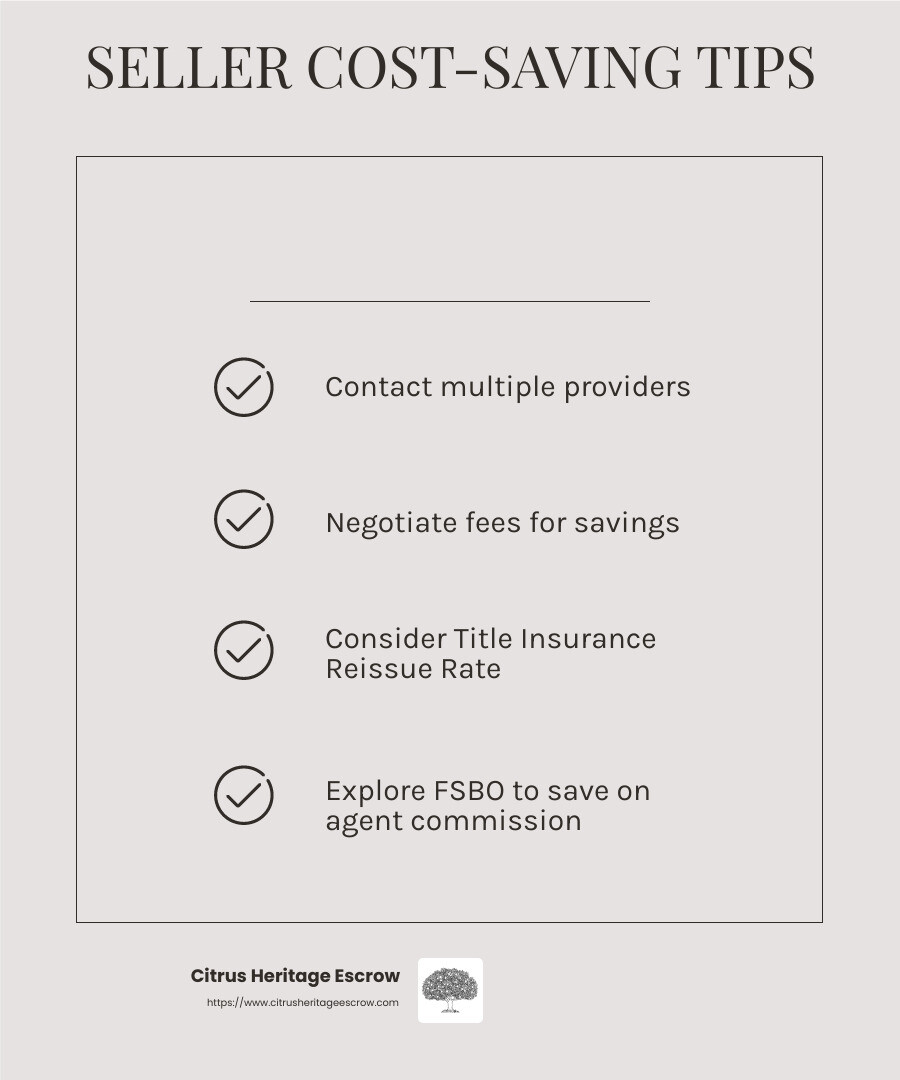
- Multiple Quotes: Reach out to several title companies, escrow services, and real estate agents. Compare their fees and services. You might be surprised at the differences.
- Negotiation: Don’t hesitate to negotiate. Many service providers are willing to lower their fees to earn your business. A small reduction can lead to significant savings, especially on high-value homes.
- Cost Comparison: Make a list of potential providers and their quotes. Compare them side by side to see which offers the best value for your needs.
Title Insurance Reissue Rate
Title insurance is a key component of closing costs, but you might be eligible for a reduced rate through a title insurance reissue rate.
- Eligibility: If you’ve owned your home for a few years, you might qualify for this discount. Check with your title company to see if you meet the criteria.
- Savings: The reissue rate can significantly lower your insurance costs, sometimes by hundreds of dollars.
- Process: Contact your title company and inquire about the reissue rate. They’ll guide you through the process and help you determine your eligibility.
For Sale By Owner (FSBO)
Going the For Sale By Owner (FSBO) route can save you from paying a listing agent’s commission. However, it comes with its own set of challenges.
- Benefits: The primary advantage is saving on the agent’s commission, which can be around 3% of the sale price. On a $500,000 home, that’s a savings of $15,000!
- Challenges: Selling your home without an agent means you’ll handle everything from pricing and marketing to negotiations and paperwork. This can be time-consuming and requires a good understanding of the real estate market.
- Steps: If you choose FSBO, start by researching home prices in your area to set a competitive price. Next, market your home using online platforms and local ads. Be ready to show your home and negotiate with potential buyers. Finally, ensure all legal documents are properly completed to avoid any legal issues.
By exploring these strategies, you can effectively minimize your seller closing costs and keep more money in your pocket. Whether you’re negotiating with service providers or considering FSBO, each step you take can contribute to a more cost-effective home selling experience.
Frequently Asked Questions about Seller Closing Costs
What is the formula for calculating closing costs?
Calculating seller closing costs can seem tricky, but there’s a straightforward way to get an estimate. Typically, these costs range from 6% to 10% of the home’s sale price. Here’s a simple formula to help you estimate:
- Identify the Home Sale Price: For example, if your home sells for $300,000, start with this figure.
- Calculate the Estimated Costs: Multiply the sale price by the typical closing cost percentage range. So, $300,000 x 0.06 = $18,000 and $300,000 x 0.10 = $30,000.
This means your estimated closing costs could be between $18,000 and $30,000. This is just an estimate. Actual costs can vary based on factors like location, negotiations, and specific service providers.
What are the biggest closing costs usually paid by sellers?
The largest chunk of closing costs for sellers typically comes from real estate agent commissions. Sellers often pay around 6% of the sale price to cover both the listing agent and the buyer’s agent. For a $350,000 home, this could mean $21,000 just in commissions.
Other significant costs include:
- Title Insurance: Protects against future claims on the property’s title. The seller often pays for the buyer’s policy in some regions.
- Transfer Taxes: These are taxes imposed by the state or local government when property ownership changes hands.
- Prorated Property Taxes: Sellers pay property taxes up to the date of sale.
What are the disadvantages of the seller paying closing costs?
While covering closing costs can make your home more attractive to buyers, it has its downsides:
- Reduced Profit: Paying these costs directly cuts into your profit from the sale. On a $500,000 home, closing costs could reduce your take-home by $30,000 to $50,000.
- Negotiation Leverage: Offering to pay closing costs might weaken your negotiation position. Buyers might expect more concessions, impacting the final sale price.
- Cash Flow Impact: If you’re counting on funds from the sale for your next home purchase, covering closing costs might limit your available cash.
Understanding these potential downsides can help you make informed decisions when negotiating with buyers. Balancing costs and benefits is crucial to achieving a successful home sale.
Final Thoughts
Selling a home is a significant financial endeavor, and understanding estimated closing costs for sellers is crucial for planning and maximizing your profit. These costs, typically ranging from 6% to 10% of the sale price, encompass various fees, including real estate agent commissions, title insurance, and transfer taxes. Knowing what to expect can help you steer the process more smoothly and avoid surprises.
Planning is key. By estimating your closing costs early, you can set realistic expectations for your net proceeds. Using tools like seller closing cost calculators can provide a clearer picture of your potential expenses. Additionally, recognizing factors such as location, property value, and service providers can help you anticipate variations in your costs.